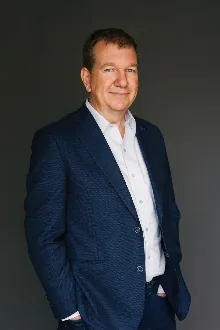
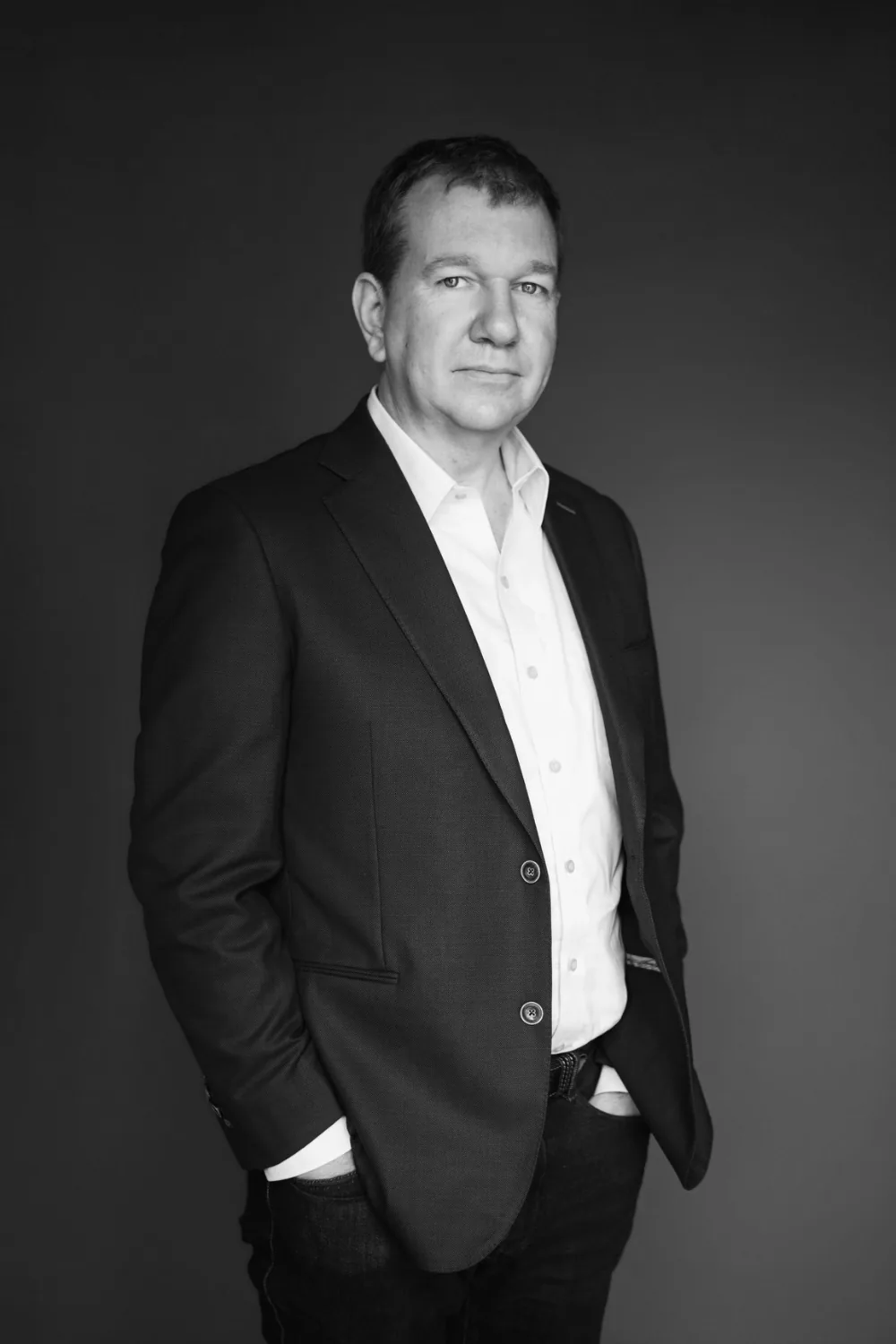
Ashley Goodall
I am an independent consultant, author, and former senior HR executive, and my work focuses on how organizations unlock human performance. I advise CEOs, CHROs, and leadership teams on leadership, talent strategy, and organizational effectiveness — combining clear thinking with more than two decades of practical experience inside large organizations.
I previously served as Senior Vice President of Human Resources at Cisco, and led Leadership Development and Performance Management at Deloitte. I am the co-author of Nine Lies About Work and the author of The Problem with Change, and I write a weekly essay in The Second Circle.
From music to leadership
I started playing the piano when I was five, because I found the large black instrument with keys that sat in our front hallway too fascinating to resist. This was my first love. Soon I added violin, viola, organ, singing in my local church choir, and experiments in writing music. Then I discovered the amazing world of orchestral music, and spent the second half of my teens in as many orchestras as I could find — sometimes five or six at once.
I went to Oxford to study music, and along the way stood on the conductor’s podium for the first time, and was mesmerized. Conducting is both easy (no actual noise required!) and impossibly hard (how to inspire without words?), and it was the first chance I’d had to shape what a group of people could create together — and to put my ideas to the test. I became the conductor of a number of student orchestras, and thought I’d found my calling.
The world, however, had other ideas: I made the final six for the postgraduate conducting course at the Royal Academy of Music, missed out on one of the two available places, spent a year studying with the head of the program, reapplied — and missed out again. So I turned instead to the fascinating world of concert hall acoustics, which requires the skills of architects, physicists, theater designers, and musicians to be melded into the design for a room.
READ MORESHOW LESS
This worked for a while, until it didn’t, largely because while I loved the design process, the construction part took years and involved inspecting ducts and pipework on wet and cold building sites.
So I applied for an MBA course — and confronted my first big “translating me” challenge. I had to persuade a business school that my background — which didn’t really fit any of their categories — made me a fit. I talked about conducting as a metaphor for leading.
There followed two years at Columbia where I learned about accounting and marketing and finance — but also about a conception of the business world that I found strangely lifeless. Shareholder value above all; maximize everything; efficiency and tidiness at whatever cost. Thinking back, my favorite professors were the ones who, discreetly or overtly, challenged this view and tried to nudge their charges toward a more human vision.
When, during recruiting season, I found the Human Capital practitioners at Deloitte it was eye-opening. I had, until then, interviewed with all the big strategy consultancies, and some of the smaller ones, and found more of this same transactional view of work. The Deloitte gang, though, seemed to offer something different. So, HR consulting it was.
Before long, though, that same uneasy feeling returned. I could sort of understand the slides, and the abstract depictions of process and ideas, but I found myself questioning how what we were doing made very much of a difference. Things improved when I left consulting and moved directly to HR — now cause and effect were closer; now training courses led to happy and more skilled professionals or not; now the abstractions receded.
Then a few big things began to shift. First, I got involved in people strategy for Deloitte overall, and began to write as a way to organize ideas and to help people find a way forward. I wrote a number of white papers which people really seemed to enjoy. Here was a thing! The subject I wrote about first was the importance of having really good teams.
Then I met Marcus Buckingham, and found a kindred spirit. Now, there was data, and evidence, and science, and research, and there was therefore a solid foundation for everything. You could study what the humans wanted! You could test ideas against the evidence!
This led to Cisco, where I was asked to build an organization to serve teams and team leaders, informed by the best data and research we could muster. For a few sunny years, the world smiled. Marcus and I wrote a book together. Cisco flew me around the world to talk about leaders and teams and all the things I felt mattered so much.
What ended it, however, was those same forces I had found so alien at Columbia and in the strategy firms. A consultant came in; there was to be a re-org; we had to redesign “the flow of work,” whatever that meant; and all at once what I had been building so carefully was no more. The feeling that it made no sense came rushing back.
In retrospect, that was clarifying. I had spent years moving closer and closer to the actual experience of people at work, only to watch abstraction sweep back in and erase it. I knew then that whatever I did next, I wanted it to be different. If I was going to write, I had to spend my words illuminating the humanity of work; if I was going to give talks, I had to spend my time showing how human flourishing and business success need not be at odds; and if I was going to advise leaders, I had to spend my efforts not on models or methodologies, but on asking better questions, on discovering what was really happening, and on helping people make sense of what they found.
I became an anti-consultant.
Today, my threads converge. The idea of leading — of setting a direction I feel is right — winds its way back to those first experiences in front of an orchestra, as does the idea and joy of making something with a team. The scientist in me, always fascinated by data and evidence and what is knowable, winds his way through my time in acoustics and my work with Marcus. The writer in me began to emerge at Deloitte and has become, each year, a bigger and bigger part of how I work and how I figure things out. And my fascination with humans at work started at Columbia and was nurtured at Deloitte.
At the intersection of these threads, I am to this day someone who feels the dissonance when something doesn’t quite make sense; someone who keeps asking whether the accepted way is really the best way; and someone who, as a leader, or as an advisor, or as a speaker, or as a writer, is every day trying to make things just a little better.
Better Questions
The defining moments in my career have arisen when I have paid attention to my own confusion.
At first, I thought the problem was me. If everyone else was certain that, for example, the annual ritual of filling in a goals form was a good way of creating alignment, then perhaps my questioning how this could be—when no one ever looked at the goals again once they were approved—was the problem.
Over time, though, I noticed a pattern. My confusion tended to show up whenever the official explanation for something and the reality on the ground didn’t quite line up.
Leaders would insist that a process was essential, while employees experienced it as counterproductive. Consultants would describe an organization one way, while the people inside it described something quite different. We would talk confidently about how humans behaved at work, only to discover that actual humans seemed determined not to cooperate.
I learned that when I paid attention to these misfit moments, useful questions emerged.
One of the first examples involved performance management. Everywhere I looked, leaders were debating ratings, calibration sessions, performance reviews, and the mechanics of documenting performance. Employees, meanwhile, disliked the entire process.
The question leaders were asking was: Is there a more efficient way to measure performance?
But the more interesting question seemed to be: How do we get more of it?
That question led me into years of research and experimentation, first at Deloitte and later at Cisco. It led to new approaches to manager check-ins. And it shifted my attention away from systems for documenting work and toward the conditions that help people do their best work in the first place.
One of those conditions, as it happened, turned out to be working on a great team. But here was more confusion. Organizations routinely describe teamwork as essential. Yet nearly every organizational process is built around individuals. We hire individuals, promote individuals, reward individuals, and, for better or worse, give ratings to individuals. Meanwhile, the actual work of most organizations happens in teams.
The question underlying our approach to people at work was: How do we make individuals more effective?
The question that interested me was: If teams are where value is created, how do we create more teams like our best teams?
That question changed the way I thought about leadership. It also changed the way I thought about organizations. Great performance, I came to believe, is rarely an individual accomplishment. More often, it emerges from a group of people figuring out how to do something together. The best organizations, and teams, are not those packed with A-performers, but rather those who know best how to support A-performances.
Then there was feedback. Someone somewhere appeared to have decided that negative feedback was the essential ingredient of human performance, and so, despite the fact that the most unnerving words to hear at work are “I have some feedback for you,” leaders were rushing around trying to figure out how to give more of it to more people more of the time. This made no sense to me.
The question everyone was asking was: How do we give more feedback?
The question that interested me was: How do people actually learn and grow?
That question led me toward a different understanding of development — one focused less on correcting weaknesses and more on understanding strengths. It also led me to a realization that continues to shape my work: the most important move to make, when in search of performance improvement, is to understand what is already working and how to amplify it.
Which brings us to consulting.
I began my career as a consultant. Later, I spent years on the client side hiring consultants, and it’s hard to remember any of them who were not intelligent, hardworking, and genuinely committed to helping. Yet something about the consulting model felt off.
Interviews were conducted. Data collected and summarized. Meetings multiplied. Slides appeared by the hundreds, and were drafted and redrafted overnight. There were frameworks, workstreams, steering committees, and PMOs. But when the dust settled, it was often difficult to say that the client understood the problem more deeply than before, and it was harder still to point to a lasting improvement in the organization’s ability to address similar challenges in the future.
This was more than confusing; it was frustrating.
The question everyone seemed to be asking was: How do we deliver a solution?
The question that interested me was: How do we help an organization become more capable, more resilient, and more effective long after the engagement ends?
That question is the reason I now describe myself, only half-jokingly, as an anti-consultant.
I don’t arrive with a proprietary framework that promises to solve every problem. I don’t bring an army of junior resources. I don’t believe that speed is always a virtue, or that a larger deliverable is necessarily a better one.
Instead, I work with leaders to understand what isn’t making sense.
Sometimes that means questioning assumptions that have become automatic. Sometimes it means paying attention to evidence that has been downplayed. Sometimes it means discovering that the problem everyone is trying to solve is not the problem that actually matters.
Many of the most persistent problems at work arise when we mistake our wishes for observations. We all carry ideas about how people ought to behave, how organizations ought to work, how change ought to happen, how performance ought to improve, and countless other “oughts” besides. The trouble begins when those ideas become more important than the evidence in front of us — which, by the way, is right there the instant we clear our minds and pay attention to real people doing real work.
Then, the useful questions become clearer, because they emerge not from theory but from reality.
Over the years, I have come to believe that most meaningful improvement begins this way. Not with certainty, but with curiosity. Not with conviction, but with humility. And not with better answers, but with better questions.